(Cannel, 2009)
21st Century teachers and how theories of teaching impact the classroom environment.
Teaching in the 21st Century is set to be a very exciting time for teachers and students alike.
Considering today's technological advances, and the many teaching and learning strategies available to teachers, we must remember who is central to this equation, and that is ‘the learner’. Teachers' roles are set to look more like the roles of mentors, rather than the providers of information, and will focus on guiding students toward the skills they need to acquire for life-long learning. This page will explore what it takes to be an effective teacher in the 21st century and how theories of teaching impact the classroom environment.
An effective 21st century teacher is someone who is:
· Knowledgeable
· Enthusiastic
· Confident
· An effective communicator
· Committed
· Compassionate
· Curious
· Patient and persistent
· Willing to share information and collaborate
· Resourceful and inventive
· Well organized
· Optimistic and ethical (Killen, 2005).
All these traits ensure that teachers are well received and able to manage a classroom well. For example: enthusiasm ensures engagement (Killen, 2003 as cited in Killen, 2005) therefore teachers who are enthusiastic and present information confidently are likely to be more successful than those who don’t. Success in the classroom is also dependent on a teacher’s commitment to continuing his/her development.
(k8teaw, 2008)
Teacher development is an on-going task and teachers need to be adaptable, flexible and dedicated to evaluating their own performance and continuing their education, to ensure the success of their students. Eisenman (2007) and Horst, Finney, & Barron, (2007), as cited in Eggen & Kauchak (2010, p. 284) suggest that ‘a continuing motivation to learn is essential for success in life’. If teachers can commit to lifelong learning and model this behaviour, the students they are teaching will gain essential skills for life. These skills can be nurtured in a good classroom environment.
Classroom management is important as it greatly contributes to students’ academic, personal and social development (Eggen & Kauchak, 2010). Teachers need to continually monitor their classroom and create a positive and welcoming environment where students feel comfortable and confident enough to participate, without fear of ridicule, and where behaviour can easily be managed. Established routines, expectations, motivation levels, the feeling of belonging and self-esteem issues are psychological factors that can make for an engaged and exciting classroom, as long as students’ needs are met (Marsh, 2008).

(teacher-students-computer, 2010)
Maslow’s ‘hierarchy of needs’ shows that belongingness and self-esteem are in the same category of importance as safety and survival needs and should therefore be addressed before any deep learning can occur (Eggen & Kauchak, 2010). Teachers should be aware of what is happening in their classroom at all times and display ‘with-it-ness’ (Kounin, 1970 as cited in Eggen & Kauchak, 2010) as this ensures students stay focused and on task. Any disturbances should be dealt with swiftly, using consistency and ensuring that a high level of respect is employed avoiding arguments at all costs and always following through (Eggen & Kauchak, 2010). Lessons may be presented using a ‘constructivist’ approach, which can help to create a fun and stimulating environment to engage and excite students.
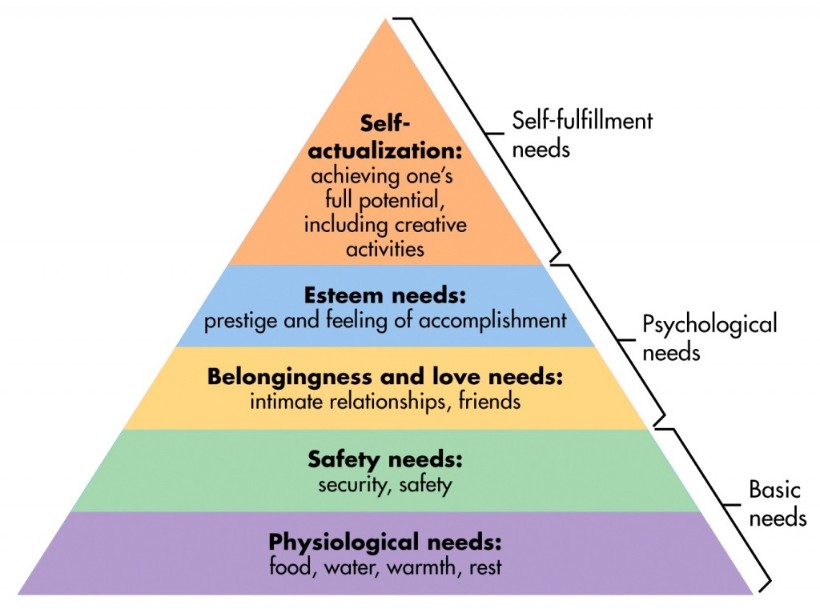
(maslows-hierarchy-of-needs1, 2010)
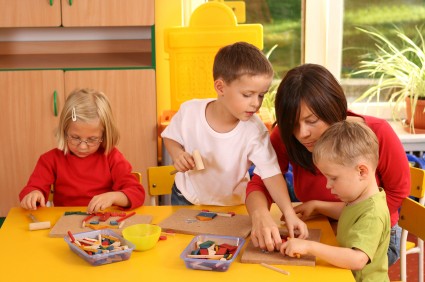
Constructivism or problem based learning focuses on maximising student understanding (Marsh, 2008). This strategy is administered through collaborative work (working in groups) and allows students to be active in their own learning. It enables students to interact with one another as well as with the teacher ensuring engagement. Effective teachers will provide assistance in the form of ‘scaffolding’ (Marsh, 2008) or guiding the students to use the knowledge they already have to help them progress. Overall it is most important for students to have clear objectives no matter which strategy is employed as this will keep them engaged and motivated to succeed.
(iStock_000004248812XalSml, 2010)
“Motivation is an internal state that arouses, directs and maintains behaviour” (Woolfolk, 2006, p336 as cited in Marsh, 2008, p34). There are two types of motivation, intrinsic and extrinsic motivation. Intrinsic motivation is when students become interested in a topic and want to find the answer to the question, whereas extrinsic motivation is when a teacher uses a reward system not connected to the task to motivate students (Eggen & Kauchak, 2010).
An effective teacher can intrinsically motivate students by making lessons interactive, interesting exciting and by encouraging students and giving positive feedback. Teachers should ensure that all students can hear and see during the lesson in order to remain cognitively active which in turn ensures greater depth of learning. Achievable tasks should be set so that students can feel good about themselves and what they are learning. Attention and praise of students should be fair as students are quick to pick up on teacher inconsistencies and this is the quickest way to exclude students and damage the classroom environment.
(Good-Grades, 2010)
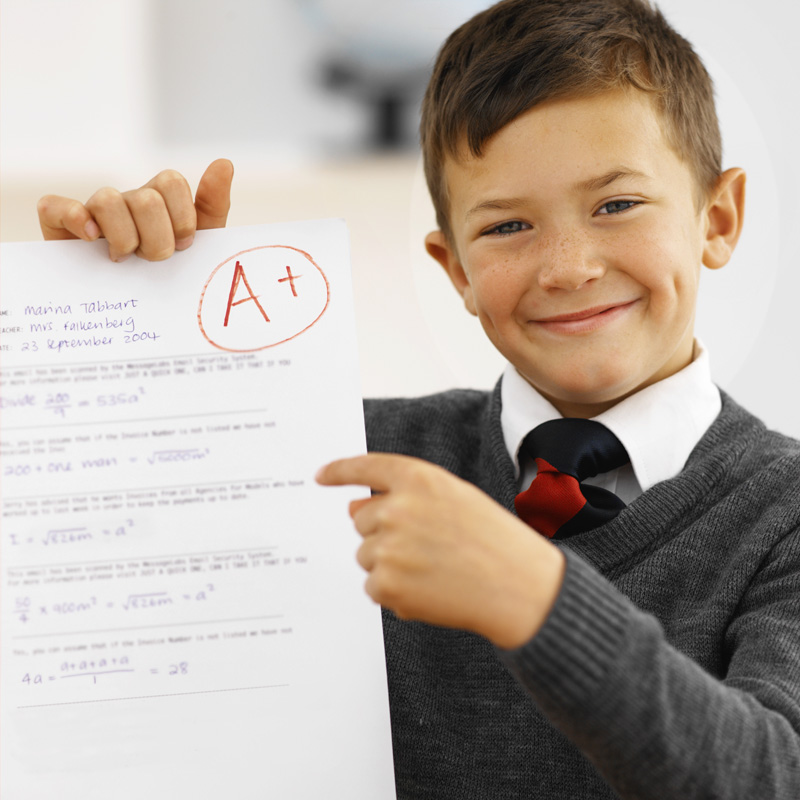
Extrinsic motivation can come in the form of praise or gold stars and certificates of achievement for younger students. A good teacher will not only recognise and give praise to a student when he/she has achieved a goal, but they will also recognise when a student has worked really hard and is improving (Eggen & Kauchak, 2010).

(Well-Done, 2010)
As we move further into the technological world it will be important for teachers to assist students in the development of social skills and physical well-being (Pryce, 2009). Although computers and technology are essential in today’s world they can also be isolating which means that teachers must take on the responsibility of ensuring that students are equipped with social skills for the real world and that they remain healthy and active.

(fitnesslines-children-exercise, 2010)
If teachers care about their students and stay focused on helping them become the best version of ‘themselves’, then students will be better equipped with the skills needed to continue life-long learning. If students are treated as individuals, and their needs are met, they will have a greater chance to become intrinsically motivated and cognitively engaged, which will ensure they gain a greater depth of knowledge. Students will be unafraid of the technological advances and use them to their advantage, hopefully becoming active members of society, who care for others, and want to make a difference in the world. The best of luck to all of you who embark on this journey to become teachers, know that you can make a difference in the world, through the children, that you come to teach.

(Copy of globe plus children, 2009)
Written by: Lucy Martic
